Published:
July 2, 2026
Updated:
July 2, 2026

Command in the Field: How a Project Superintendent Thinks Four Moves Ahead

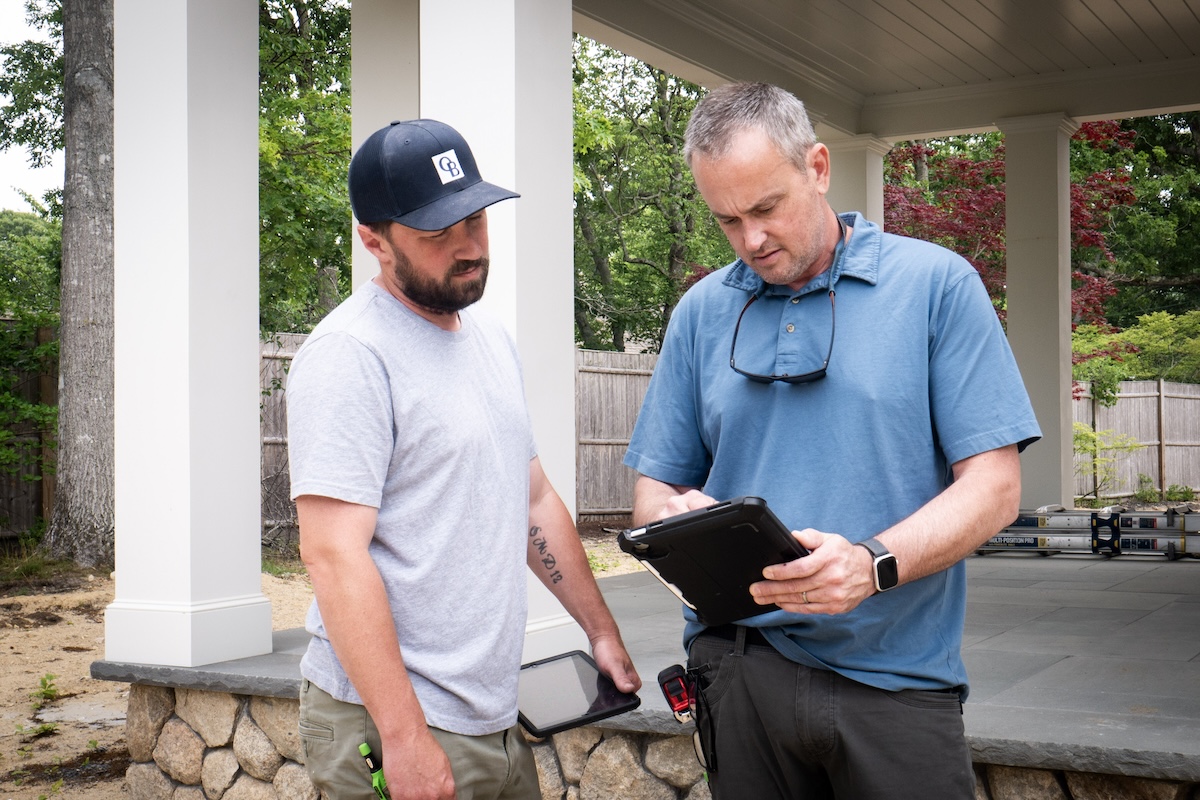
O'Neill Bowes staffers, Alec Peters and Jeff Glines, confer on a job site in Barnstable MA.
Field judgment is not a credential. It is the ability to see the whole board before the first move is made. O'Neill Bowes Project Superintendent Alec Peters has spent two decades building that kind of mechanical thinking, and it shows up on every project he runs.

Article Summary

What is this article about and who is it for?
This article is for anyone planning a high-end custom home on Cape Cod who wants to understand what field judgment is, where it comes from, and why it matters. It uses O'Neill Bowes Project Superintendent Alec Peters as the lens, examining how two decades of demanding residential construction produced a specific kind of operational intelligence that protects the quality of a project from preconstruction through the final walkthrough.
What does Alec Peters mean when he talks about being mechanical?
Mechanical, in Alec's use of the word, has nothing to do with tools or technical knowledge. It means understanding that every step on a job site exists in relationship to the steps around it, that the order is not arbitrary, and that getting the sequence wrong sends a ripple forward through everything that follows. It is common sense with Process, applied consistently.
How is mechanical thinking different from experience?
Experience is time. Mechanical thinking is what you built during that time. Plenty of people log twenty years in the trades and are still reactive, still managing the consequences of decisions made in the wrong order. Judgment is the ability to run the sequence forward in your head before the first move is made and to see where it breaks down before it does.
How does field judgment show up on an active OBB project?
It shows up in three specific ways: reading plans for what they do not show, catching conflicts before anyone has picked up a tool; reading the field in real time, flagging conditions that even BIM modeling did not catch and resolving them before they become problems in the finished house; and reading people, identifying the subcontractors who understand their own Process and holding onto them across projects.
What does it mean for a client that Alec operates without needing to check in with the principals for every decision?
It means the project is not waiting on a phone call. The decisions that keep a custom home moving are being made in the field, in real time, by someone who has the experience and judgment to make them correctly. That autonomy is not a gap in the organization. It is the organization working exactly as it should.

Ask Alec Peters what separates a good job site from one that struggles and he doesn’t talk about budgets or timelines or the quality of the drawings. He talks about Process. Specifically, about whether the people on that site understand their own particular role’s process, the understanding that every action is connected to the step that follows it, and that getting those steps tangled up can cost everyone, no matter how skilled the hands doing the work.

It sounds simple but it’s less common than you’d think.

There is a kind of thinking that experienced builders develop over years on various job sites, in enough different conditions, alongside a variety of craftsmen who either had it or didn't. It’s the ability to see the whole board before the first move is made, to run the sequence forward in your head and know where it is likely breaks down before it actually does.

Alec calls it being mechanical. "You just need to be mechanical. By mechanical, I mean just have common sense with your process."

That’s what keeps us here at O’Neill Bowes excited about working with Alec. It’s worth some details about where that comes from, and what it looks like when he’s running a job site.

Mechanical Thinking: What It Is and Why It Is Rare

Mechanical, in the way Alec often uses the word, is about understanding that every step on a job site exists in relationship to the steps around it, that the order is not arbitrary, and that pulling one piece out of sequence sends a ripple forward through everything that follows. In this case, it is not about what you know how to build and has much less to do with tools or technical knowledge.

And there’s more to it as well - mechanical is different from experience. Experience is time. Plenty of people log twenty years in the trades and are still reactive, still managing the consequences of decisions that were made in the wrong order. Judgment is what you built during that time: the ability to run the sequence forward in your head before the first move is made, to see where it breaks down before it does.

A chess player does not move a piece and then consider the consequences. The consequences are already mapped. A superintendent who, similarly, thinks in this way, runs a campaign that was planned before the crew arrived.

An inside baseball illustration of what happens when that thinking is absent: the carpenter installs stair railings before the nosings are in place. He has done it enough times that he is confident in his method. What he has not accounted for is that the baluster spacing will throw his reveals once the nosings go in. Every job is different. The proven sequence is not optional.

How That Thinking Is Built

On an active OBB project, mechanical thinking is anticipatory and shows up before anything goes wrong. It is in the superintendent reading a set of plans and catching what the drawings do not show, flagging the conflict before the door has been ordered, before the frame has been built, or anyone else has noticed there’s an issue. The problem gets solved at the plan stage rather than in the build stage, which is exactly where it should be solved.

That kind of pattern recognition is transmitted through proximity to people who already have it, in environments where getting the sequence wrong has consequences that show up permanently in the work, not necessarily assumed by credentials or what you see on a resume.

For Alec that transmission happened across two decades of high-end residential construction, starting on Nantucket under an ex-boatbuilder from Maine who handed him a router and a set of hemlock planks and expected the stair treads to be right when the steel was ready. No hand-holding but real business consequences. Later, it came from working alongside a craftsman who could build a cabinet in twenty minutes. Alec’s eventual business partner, he was always running several steps ahead in his head. That partnership led to years of interior trim at the highest levels of Cape Cod residential construction, where the standard of finish leaves no margin for process errors.

Each environment asked the same question: do you understand why the sequence is the sequence? The answer, over time, became muscle memory.
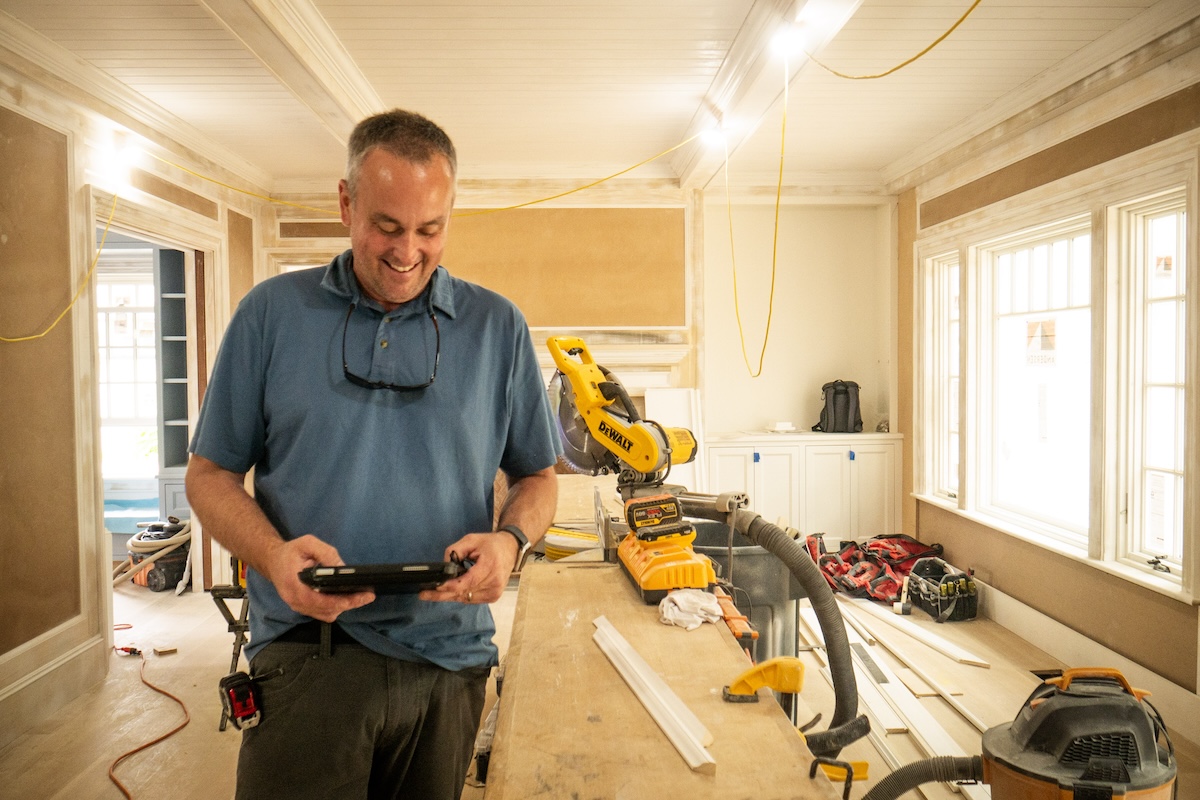
Alec Peters, Project Supervisor, on site of an O'Neill Bowes build in Barnstable, MA

Reading the Board Before the First Move

Field judgment shows up in three specific ways on an active OBB project, none of them patient enough to wait for a problem to fully form.

The first is reading plans for what they do not show. A set of drawings looks complete on paper. Alec sees two doors that will conflict once both are hung, or a swing path that will clip a wall before anyone has picked up a tool. These are not obvious errors, they’re the kind of thing that only becomes visible to someone who has seen enough finished versions of that miscalculation to recognize it on paper.

The second is reading the field in real time. Even with Jim Stokes working through each build in BIM before construction begins, field conditions can still produce surprises. On a current project, a dormer line clipped the swing path of an in-swing door above the garage, something the model had not caught. Alec flagged it, the door was reordered, and the issue was resolved before it became a problem in the finished house. That is the job working the way it should.

The third is reading people. Allan is a subcontractor who has been on many OBB projects Alec has run. He shows up prepared, understands his own processes, and does not need guidance on sequence. Everyone at OBB wants Allan on their job, he’s a golden find. A superintendent who can identify that kind of craftsman, and hold onto him, is protecting the standard of the work as directly as anything else he does on site.

Command Without Micromanagement

There are plenty of afternoons in which Alec will not have spoken to Tim or Nick at all. He’d been to two job sites, walked a punch list with homeowners, worked through a framing issue with Jim, and spent an hour pulling apart a door with a sub to figure out why it wasn’t hanging right. By 3:30 the day was full and the principals had not needed to be involved in any of it. Which is fine with them as well, there’s enough on their respective plates to worry about.

That is the organization working exactly as it should and why the team is only getting stronger over time.

A capable field commander does not put a call out to the rear for every decision. He knows the objective, knows the terrain, and he executes. What makes that possible is not independence for its own sake but the combination of experience and judgment to make the right call available in real time, without unnecessary lifelines or a delay while the project waits for someone who’s off-site.

For a client building a custom home on Cape Cod, that matters in a very practical way. The decisions that keep a project moving are being made by someone who has the whole board in his head, who has seen this situation before, and who knows exactly what the next move is.

What It Means for the House

Everything a client sees when they walk through a finished O’Neill Bowes home is downstream of decisions that were made in the right order, by team of people who knew what that order was.

The trim sitting the way it should. The details landing the way they were drawn. The doors opening the way they are supposed to. None of that happens by accident, and none of it is purely a function of good materials or skilled hands. It is the product of Process, applied consistently from the first site visit through the final walkthrough.

What field judgment protects, in practical terms, is the absence of compromise. On a job site where the sequence breaks down, compromises accumulate. They show up in the finished house in ways that may be difficult to name but impossible to miss. Any client who builds at this level, with this kind of investment, deserves a superintendent who has spent two decades learning how to prevent exactly that.

That’s what O’Neill Bowes Building ensures is the case on every one of the homes they take on.

On to the Next One

At OBB, the work that happens before a project breaks ground is designed to resolve as much as possible before the crew arrives. The preconstruction process, the BIM modeling, the systems we’ve built around quality and sequence, all of it is a result of the work done by the folks carrying it into the field, on-site.

That is what field judgment is for and what we’re pleased to say Alec Peters brings to every project he runs.

If you are planning a custom home on Cape Cod and want to talk through what that process looks like from the ground up, we would be glad to hear from you.

••••

Planning a project on Cape Cod?
Call Our Office Anytime to Discuss: 508-419-2622

Key Points

What does Alec Peters mean by mechanical thinking, and why does he consider it rare?

Mechanical thinking, in Alec's framing, is a specific kind of operational intelligence that is less common in the trades than it should be. It is the foundation of everything else a good superintendent does on a high-end job site.

  • Mechanical does not mean technical: it means understanding that every step on a job site exists in relationship to the steps around it, that the order is not arbitrary, and that pulling one piece out of sequence sends consequences forward through everything that follows
  • It is distinct from experience: experience is time served, while mechanical thinking is what a builder develops during that time, the ability to see the whole sequence in advance and identify where it is likely to break down before it does
  • The chess analogy is precise: a chess player maps the consequences before moving the piece, and a superintendent who thinks the same way is executing a campaign that was planned before the crew arrived, not reacting to problems as they form
  • The stair railing example illustrates what its absence looks like: a carpenter installs railings before nosings are in place, confident in a method he has used before, not accounting for the fact that baluster spacing will throw his reveals once the nosings go in, because every job is different and the proven sequence is not optional
  • Common sense with Process is Alec's own description: simple to state, genuinely difficult to find, and the quality that OBB most values in the person running their job sites

Where does mechanical thinking come from, and can it be taught?

Field judgment of this kind is not conferred by credentials or developed behind a desk. It forms through a specific kind of exposure, over time, in environments that demand it.

  • It is transmitted through proximity: working alongside people who already have it, in conditions where getting the sequence wrong produces consequences that show up permanently in the finished work
  • Alec's formation started on Nantucket under an ex-boatbuilder from Maine who handed him a router and a set of hemlock planks with no hand-holding and real business consequences for getting it wrong, an environment where the standard was set by someone who built with boat-based precision
  • The carpenter who became Alec's business partner modeled a different version of the same thinking: a craftsman who could build a cabinet in twenty minutes, whose head was always running several steps ahead, and whose partnership led to years of interior trim at the highest levels of Cape Cod residential construction
  • Years of finish work at that level did the rest: the standard of interior trim on a high-end Cape Cod build leaves no margin for process errors, and working in that environment consistently is its own form of education
  • There is no shortcut to it: the pattern recognition that experienced field judgment produces is the accumulated result of enough job sites, enough conditions, and enough craftsmen who either had it or did not

How does field judgment show up in practice on an active OBB project?

Alec's mechanical thinking manifests in three distinct and concrete ways on every project he runs, none of them waiting for a problem to fully form before engaging.

  • Reading plans for what they do not show: a complete set of drawings still contains conflicts that only become visible to an experienced eye, two doors that will collide once both are hung, a swing path that clips a wall, a return wall that blocks a refrigerator door from opening fully
  • Reading the field in real time: even with Jim Stokes working through each build in BIM before construction begins, field conditions produce surprises, and on a current project Alec caught a dormer line clipping the swing path of a door above the garage before it became a problem in the finished house, the door was reordered and the issue was resolved at the right stage
  • Reading people: Allan is a subcontractor who has been on many OBB projects, shows up prepared, understands his own Process, and does not need guidance on sequence, and the fact that every member of the OBB team wants Allan on their job says something specific about the value a superintendent adds when he can identify and hold onto that kind of craftsman
  • The common thread across all three' is anticipation: field judgment is not reactive, it is the ability to see what is coming and position the work correctly before the consequences arrive
  • For the client, this translates directly into fewer surprises, fewer delays, and a finished house that holds to the standard it was designed to meet

What does it mean that Alec runs OBB job sites without needing to check in with the principals for every decision?

The autonomy with which Alec operates is not incidental. It is the product of a deliberate organizational structure built around trust, experience, and the kind of field judgment that does not require supervision to produce good outcomes.

  • A capable field commander does not call headquarters for every decision: he knows the objective, knows the terrain, and executes, and what makes that possible is the combination of experience and judgment that puts the right call within reach in real time
  • On a typical afternoon Alec may not have spoken to Tim or Nick at all, having covered two job sites, a homeowner punch list, a framing issue with Jim, and a door problem with a sub, all of which were handled correctly without escalation
  • That is the organization working as it should: Tim and Nick have enough on their respective plates, and a superintendent who requires constant involvement is a cost to the organization that shows up in every project he touches
  • For the client this matters in a very practical way: the decisions that keep a custom home moving are being made by someone who has the whole board in his head, has seen the situation before, and knows exactly what the next move is, without delay
  • The trust between Alec and OBB ownership is structural, built on a track record of sound judgment in the field and the kind of autonomy that only makes sense when the person exercising it has genuinely earned it

What does field judgment protect in the finished house, and why does it matter at the level OBB builds?

Every detail a client sees in a finished OBB home is downstream of decisions that were made in the right order. Field judgment is what keeps that order intact from the first site visit through the final walkthrough.

  • The trim sitting the way it should, the details landing the way they were drawn, the doors opening as intended: none of that is purely a function of good materials or skilled hands, it is the product of Process applied consistently by someone who knows what that requires
  • What field judgment protects is the absence of compromise: on a job site where the sequence breaks down, compromises accumulate, and they show up in the finished house in ways that are difficult to name but impossible to miss
  • At the level OBB builds, the client's investment demands a superintendent who has spent two decades learning how to prevent exactly that, not someone developing that skill set on their project
  • The preconstruction process and BIM modeling resolve a significant portion of problems before the crew arrives, but that work is only as good as the person carrying it into the field, and field judgment is what ensures the plan stays the plan
  • For a client building a custom home on Cape Cod, the difference between a superintendent who thinks four moves ahead and one who does not shows up in the finished house, in every detail that landed the way it was supposed to

How does the OBB approach to preconstruction and field command work together to protect the client's project?

At O'Neill Bowes, the preconstruction process and the field command that carries it through are two parts of the same system, and the quality of the finished house depends on both working together.

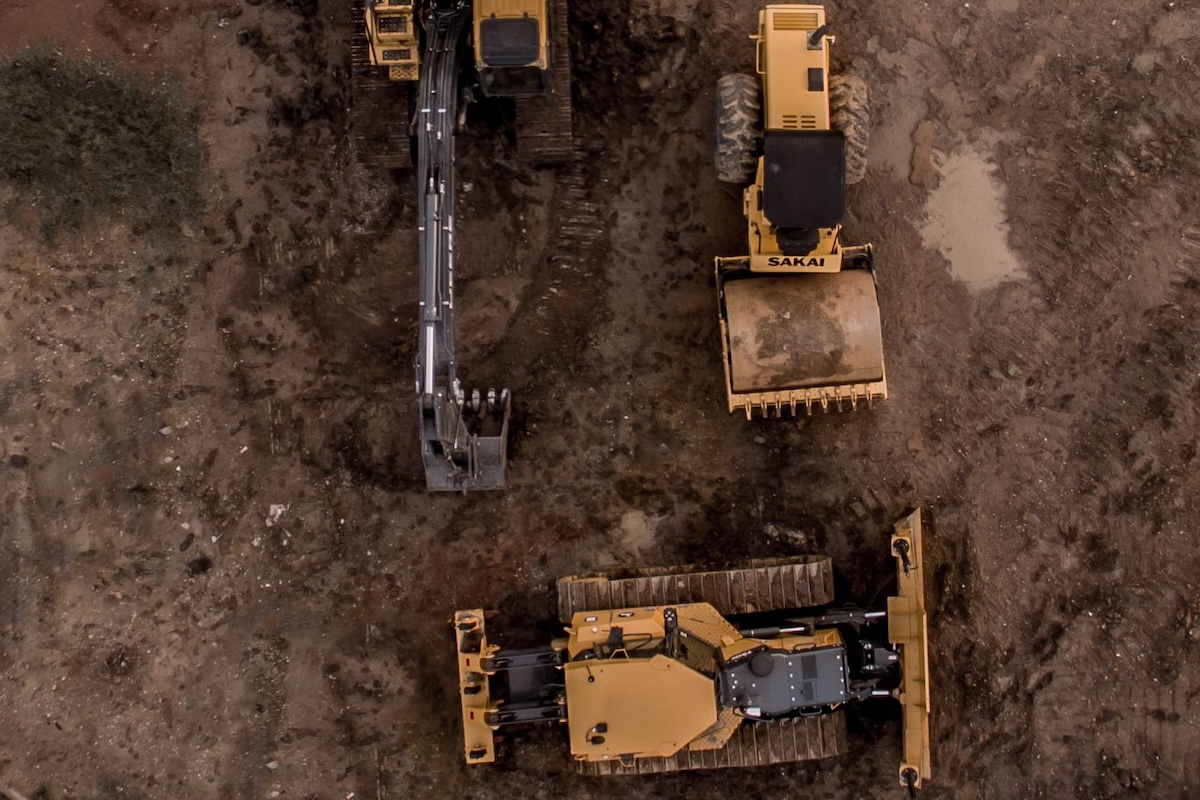
  • The preconstruction process is designed to resolve as much as possible before the crew arrives, with Jim Stokes modeling each build in BIM to surface conflicts that flat drawings would not catch and give the field team the clearest possible picture before construction begins
  • Field conditions still produce surprises, but the nature of those surprises is different when the groundwork has been done correctly: they are exceptions to a well-resolved plan rather than the accumulated cost of decisions that were never made
  • Alec's field judgment is what carries the preconstruction work through to the finished house, catching what the model did not, reading the sequence in real time, and making the calls that keep the project moving without waiting on anyone who is not already on site
  • The systems OBB has built around quality and sequence are only as good as the person running the job site, and a superintendent who thinks four moves ahead is the reason those systems hold under the conditions that every custom home build eventually produces
  • For the client, the result is a finished house where the plan stayed the plan, the details held to the standard they were designed to meet, and the compromises that accumulate on less well-run projects simply did not happen

More Perspectives

A Lite Studio Production