There are houses on Cape Cod that can stop you in your tracks. The proportions feel right in a way that is difficult to explain but seem impossible to miss. The roofline sits just right. The chimney anchors the facade without overpowering it. The house feels like it belongs exactly where it is, and that it’s been there forever.
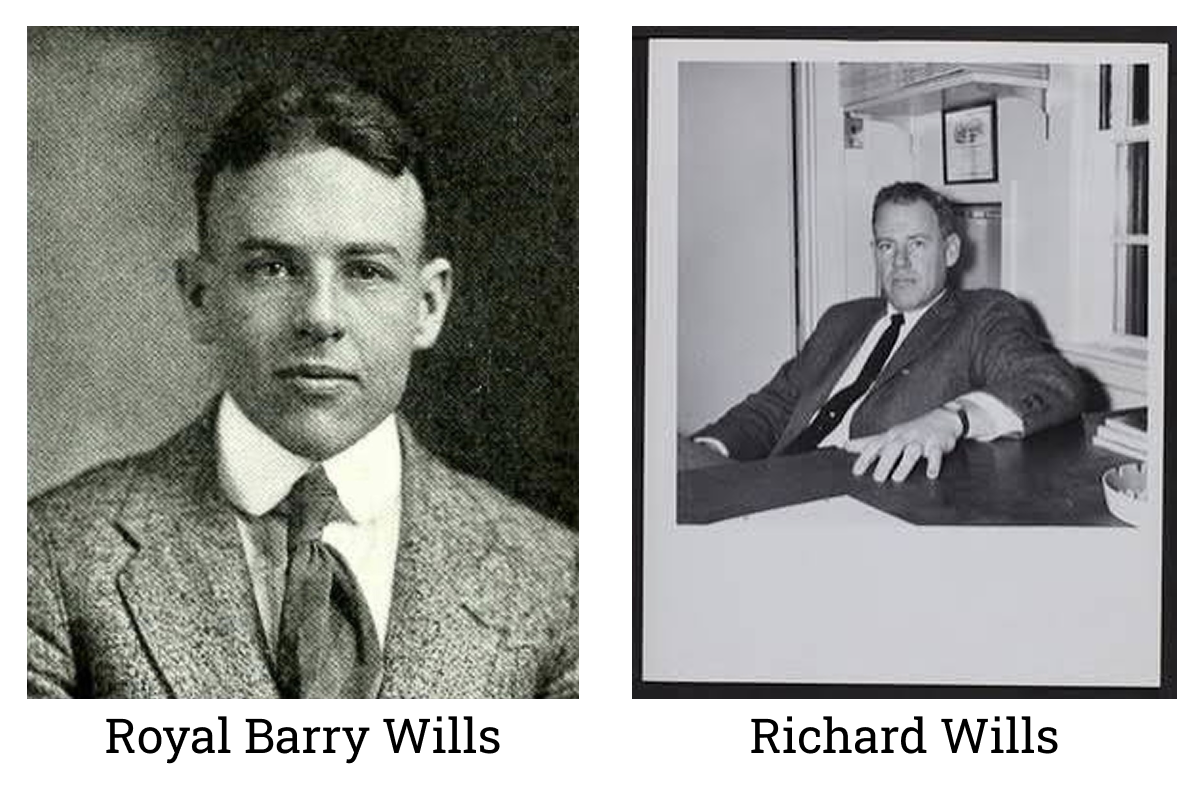
Many of those houses share a common origin, even if the people admiring them from the street have no idea. The name is Royal Barry Wills, and if you have spent any time on the Cape, you have almost certainly stood in front of his work without knowing it.
Wills was the architect who took the established Cape Cod house and brought it fully into the 20th century, refining a centuries-old form into something so widely recognized and so deeply embedded in the built landscape of this peninsula that it functions, as our Tim O’Neill puts it, almost like a name brand.
That legacy is still shaping what gets built here today, and who builds it well.
Royal Barry Wills graduated from MIT as an architectural engineer in 1918 and spent his early career at Turner Construction in Boston, learning how buildings actually go together before he turned his full attention to designing them. He opened his own practice in 1925, and built his reputation in one of the unorthodox ways people built reputations before there was any other way to do it: by publishing sketch plans and answering reader questions in the Boston Transcript until the commissions followed.
His motto was "no stock plans." Every house was designed for the family who would live in it, specific to the site where it would sit. That principle sounds simple and it was not common then, and it is not common now.
What he understood about the Cape Cod house specifically he learned from the history of the homes built here over the decades and century before him: that its power lived in its restraint. Low to the ground, with eaves sitting just above the windows. An oversized central chimney that anchored the whole composition. A roof pitch between eight and ten inches in a twelve inch run. Clapboards graduating from a narrow exposure at the foundation to a wider one at the eave. Every element in careful proportion to the rest. “Scale,” in Wills's own words, “was the thing that gave a house its perfection and charm.”
In 1938, Life Magazine asked four modern and four traditional architects to design homes for the same family. The family chose Wills over Frank Lloyd Wright. That is the measure of where he stood.
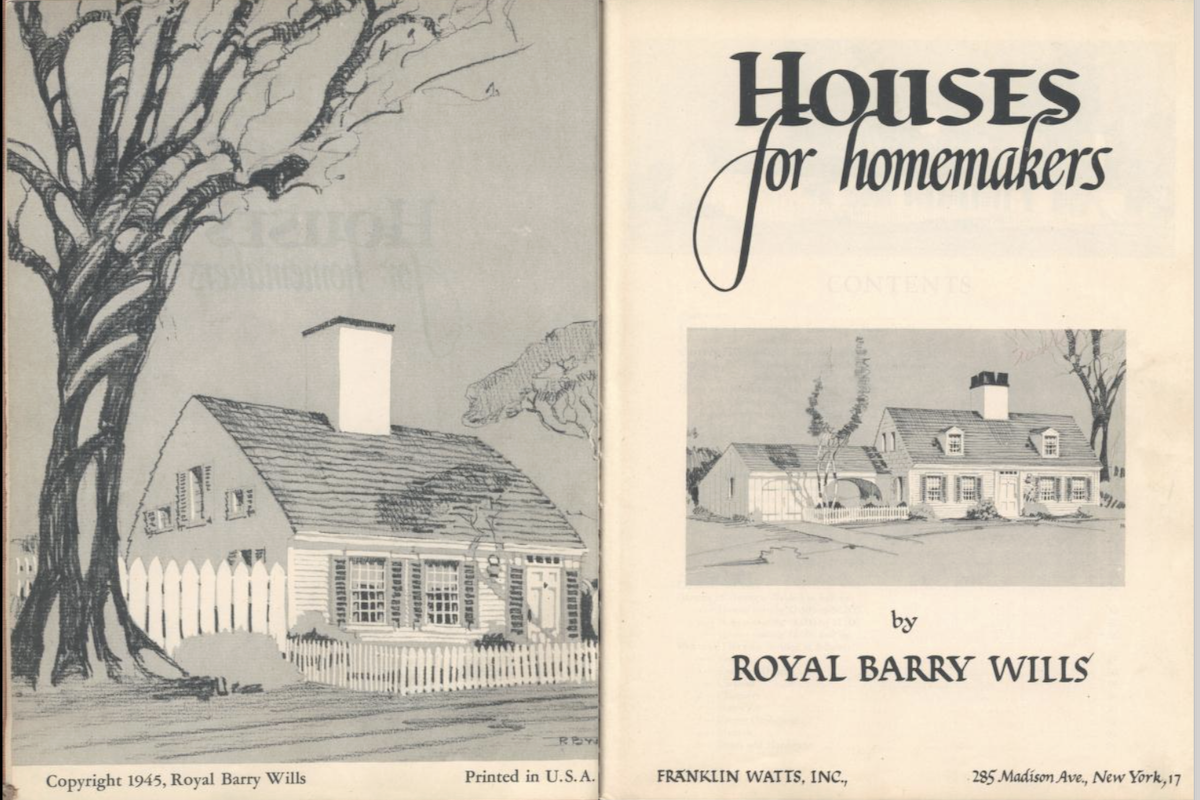
As noted, Wills did not invent the Cape Cod house. The form had existed for centuries, a practical response to the New England climate by people who needed shelter more than they needed statements. What Wills did was understand that the form had something worth preserving, and that preserving it required discipline rather than nostalgia.
He made the Cape Cod house work for the 20th century. Indoor plumbing, closets, central heat, an electric kitchen, a garage: all of it had to be absorbed without losing the formal character that gave the house its authority. He allowed the house to grow, extending to the rear or sides in L, U, or H configurations, but insisted the front facade always read as a true one-and-a-half story Cape. Scale was his governing principle: the relationship of parts to one another that produces proportion, and proportion is what makes a house feel right, whether people can explain why or not.
In taking this tract, he did something that went beyond architecture. The houses he designed did not simply respond to Cape Cod. They became part of what & how Cape Cod is known. The rooflines, the chimneys, the way a well-proportioned house sits on a lot and looks as though it could not have been built anywhere else: Wills had a hand in making that the standard, and the Cape looks the way it does in part because of it.
What happened next is what happens to most things of genuine quality when they find a wide enough audience. The form Wills had spent decades refining entered the broader culture and was reproduced at scale, stripped of the craft and intention that had made it work. The postwar tract housing boom borrowed the visual language of the Cape without the discipline that Wills valued so much. The houses multiplied. The standard did not travel with them.
Wills knew the difference, and so did the clients who sought him out specifically because of it.
Richard Wills joined his father's firm in 1952 and became full partner in 1962, the year Royal Barry Wills passed away. He served as sole principal of Royal Barry Wills Associates until his own death in 2014, a stewardship of more than five decades that required skill, not only architectural skill.
It’s debatable if the decades Richard worked through were as hospitable to the values he held to those decades prior. The 1970s, 80s, and 90s saw architectural fashion move hard toward modernism and away from the craft-based traditional forms his father had championed. Where other firms followed the market, Richard held the line. His own words are precise on the point: "Maintaining the proper scale and proportion in relating to the basic New England architecture that I have been dedicated to and not letting the fashions of the day interfere."
On Cape Cod, that dedication left a visible mark. A significant portion of the high-end residential architecture on the peninsula from the 1980s through the early 2000s carries his name up and down the best streets in Osterville, Chatham, and other towns where serious residential work was concentrated. Drive slowly enough through those neighborhoods and the Wills signature is readable in the rooflines and chimneys, in the way the houses sit on their lots as though they grew there rather than were placed.
The firm's archive, now held by Historic New England, documents more than 2,000 projects.
The work Royal Barry Wills and his son Richard produced does not sit in a museum. It sits throughout Cape Cod for any and everyone to admire, and it is still being engaged by architects and builders doing the most serious residential work on the Cape today.
Many companies in the industry working on the Cape regularly undertake renovations of original Wills houses, approaching them with the care one brings to work that has genuinely earned its place. That's more than nostalgia, it's recognition that the standard Wills set is still the one to meet, and that a house built to it deserves to be treated accordingly.
The form itself has proven, as Richard Wills noted, almost infinitely adaptable to the demands of contemporary life. A Wills house is not a period piece requiring period solutions: it’s a framework, disciplined in its proportions and generous in what it can absorb, that contemporary architects and builders return to because it works.
On Cape Cod, where the built environment is finite and every addition to it could prove to be permanent, that kind of staying power is the definition of what good architecture is supposed to do at its most ideal.
Cape Cod is not a place where mistakes get torn down and forgotten. The built environment here accumulates, and what goes up tends to stay up, which means the standard a builder works to is more than just a matter of professional pride. It is a contribution to a place that has no room for disposable works.
Tim O'Neill came up through E.B. Norris, one of the most respected builders on Cape Cod and a firm with direct experience on Richard Wills projects in the area. The craft standards that environment demanded, the attention to proportion and detail, the understanding of what a high-end Cape Cod residential build actually requires when the architectural standard has been set by the Wills firm, those standards shaped how Tim learned to build and informed how O'Neill Bowes Building works today.
OBB builds in that tradition without being a replica of it. The values that defined the Wills approach, scale, proportion, craft, the relationship of parts to one another and to the land they sit on, are the values that inform every project OBB takes on today.
Experience Built to Last is their motto, yes, but, on Cape Cod, where the land is limited and the work is permanent, it is the only standard worth building to.
Royal Barry Wills and his son Richard spent decades establishing what the best residential architecture on Cape Cod looks like. That work is visible on streets across the peninsula, and it continues to set the terms for what serious building here means.
At O'Neill Bowes, we’re well aware of what those terms are. Whether the project is a new custom home, a renovation, or a build on a site with deep architectural history, we approach it with the craft and care the Cape deserves. The Royal Barry Wills Associates archive, now held by Historic New England, is worth exploring for anyone who wants to go deeper into that history.
Wills is one of several architects whose work on this peninsula continues to inform how we think about building here. We’re looking forward to exploring more of the architects, designers, and builders who continue to shape the only place we’re at home.
If you are planning a project on Cape Cod and want to talk through what building to that standard looks like in practice, we would be glad to hear from you.
Call our office anytime: 508-419-2622.
Royal Barry Wills was the architect who took the Cape Cod house and brought it fully into the 20th century, refining a centuries-old form into something so widely recognized that it became embedded in the American imagination. His influence on Cape Cod specifically is visible on nearly every significant residential street on the peninsula.
Wills did not invent the Cape Cod house. He understood it well enough to preserve what mattered while making it work for modern life, and in doing so he helped shape the Cape itself.
Richard Wills served as sole principal of Royal Barry Wills Associates for more than five decades, carrying the firm through some of the most difficult terrain for traditional residential architecture in American history and leaving a visible mark on the best residential streets on the Cape.
The work Royal Barry Wills and Richard Wills produced is not a historical artifact. It is an active presence in the way Cape Cod's best residential architecture is thought about, renovated, and built today.
The connection between O'Neill Bowes and the Wills tradition is not a marketing claim. It runs through the specific builders and craft environments that shaped how Tim O'Neill learned to build, and it shows up in the standards OBB holds on every project it takes on.
The answer is not sentimental. It is practical. The principles Wills worked from, scale, proportion, restraint, the relationship of parts to one another, are not period-specific. They are the conditions under which a house earns its place in a landscape and holds it.