Published:
July 1, 2026
Updated:
July 1, 2026

Meet the Team: Alec Peters, Project Superintendent

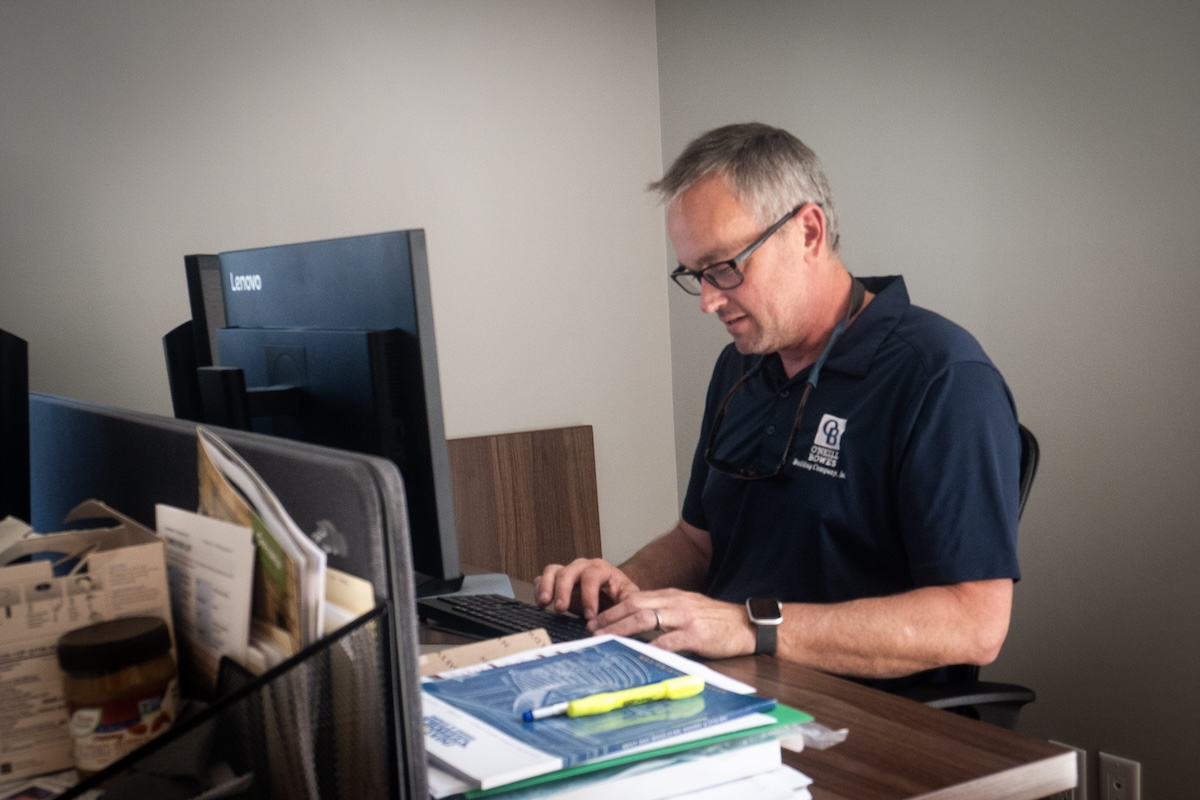
Alec Peters, Project Superintendent at O'Neill Bowes Building in Osterville MA
Alec Peters is part of the connective tissue between what O'Neill Bowes resolves in preconstruction and what gets built in the field. More than two decades of high-end residential construction on Nantucket and Cape Cod shaped the judgment he brings to every project he runs.t

Article Summary

Who is Alec Peters and what does he do at O'Neill Bowes Building Company?
Alec Peters is a Project Superintendent at O'Neill Bowes Building Company in Osterville, Massachusetts. He manages multiple high-end custom home projects simultaneously, serving as the connective tissue between what gets resolved in preconstruction and what gets built and finished in the field.
What is Alec Peters's background before joining O'Neill Bowes?
Alec grew up on Long Island working alongside his father, renovating restaurants his dad had taken on and operationalized before heading south to NC State, where he earned a degree in greenhouse production and construction management. He came up through high-end residential construction on Nantucket under a demanding craftsman who built with boat-based precision, spent years running trim crews for reputable Cape Cod builders, and ran his own company, Fenton Builders, for close to two decades before joining OBB.
What does a Project Superintendent actually do on a high-end Cape Cod job site?
On any given day Alec is managing three or four active projects at different stages of construction, moving between sites, coordinating subcontractors, resolving field conditions, walking punch lists with clients, and making the calls that keep each job on schedule and on standard. He documents every stage with photography and a 360 camera so that questions that arise months later already have answers.
How does OBB's preconstruction process change what Alec's job looks like in the field?
Because Jim Stokes works through each build in BIM before construction begins, surfacing conflicts that flat drawings would miss, Alec arrives on site with a significant portion of potential field problems already resolved. That shifts his attention from recovery and improvisation toward quality control and execution, which is where a superintendent's time should go on a project at this level.
What kind of field judgment does Alec bring that experience is the only source of?
Alec can read a set of kitchen plans and identify a refrigerator door that will not fully open, or two doors that will conflict once hung. He watches for subcontractors who apply a practiced sequence to a job that requires a different one, catching that pattern before it produces work that has to be redone. That kind of recognition comes from years on enough job sites that the shape of a problem becomes visible before it fully forms.

Custom homes start as a plan: drawings, models, specifications, decisions made at a table before bids are in or any materials arrive on site. What happens between that plan and the finished house has a lot to do with a Project Superintendent, and they play an big part in whether a project holds together or quietly comes apart.

At O'Neill Bowes, one of those key roles belongs to Alec Peters. He is the connective tissue between what we resolve in preconstruction and what & how our crews execute in the field. He manages multiple active projects simultaneously, keeps the sequence of work moving, puts out any spot fires that arise, and makes the calls that keep a job on track without pulling the alarm for every decision. The trust is built in because his sound judgment has grown over the past couple decades.

That judgment comes from a particular way of coming up in the business, building at residential construction’s highest levels going back before Alec knew that’s where he was headed.

What Drew Him Here

Alec Peters grew up on Long Island. His father purchased & operated restaurants in Manhattan and bought properties to renovate and resell. In his early teens, some of Alec's summers were spent working alongside him doing exactly that: demoing walls, banging nails, learning by doing before there was any plan to take it to trade. It was handed to him, and he took it and held on.

By high school the summers looked different, working the grounds crew at a private school nearby, but the instinct was the same. The school kept a full-time plumber, electrician, and carpenter on staff, and during slower stretches Alec would find his way into whatever they were working on. He liked it. Not any one trade in particular, but the hands-on time, the learning, the way each of those technicians knew exactly what they were doing and why.

That curiosity never really switched off. In school, if someone put a hole in a sheetrock wall, he patched it the next day. He took things apart constantly (and did his level best to get them back together, something he's gotten considerably better at since). What he was inadvertently doing was building a mental library of how things work, and that library has been earning interest since.

After high school he headed south, first a stop at Elon College in North Carolina and then to NC State where he earned a degree in greenhouse production and construction management. He worked in nurseries, handled irrigation, and put himself through school on his own. The greenhouse work was methodical and physical, and he liked that. But what he was really developing was something procedural: an instinct for how things fit and work together, in what order, and why the sequence matters.

What the Role Actually Requires

On any given day, Alec is managing three or four active projects at various stages of construction. There is no single job site, no single crew, no single problem, it’s a running list that changes by the hour, and the talent is knowing which item on that list needs him right now and which ones can wait until after lunch.

A morning might begin with working through trim details with a carpenter, then he’ll drive to another site to walk a punch list with homeowners who just got back into town, then over to meet with Jim on a framing issue before pulling apart a door with a sub to figure out why it’s not hanging right. By 3:30, the day has covered four decisions, three problems that were not on the list when the day started, two site visits, and a partridge in a peartree. That is a normal day - which is to say there is no normal day.

What his role actually requires, beyond the logistics, is the responsibility for an entire project: where the wires are behind the sheetrock, which subs are the most reliable, and which need instruction, where the sequence can flex and where it cannot. Alec photographs every stage of every project and walks each house with a 360 camera before walls close in, so the answers to questions that come up six months later are already documented. And those documents come into play more often than you’d think.

What makes him good at the hardest parts of this, however, is the same thing that made him patch a sheetrock wall in high school without being asked. He sees what needs doing and does it.
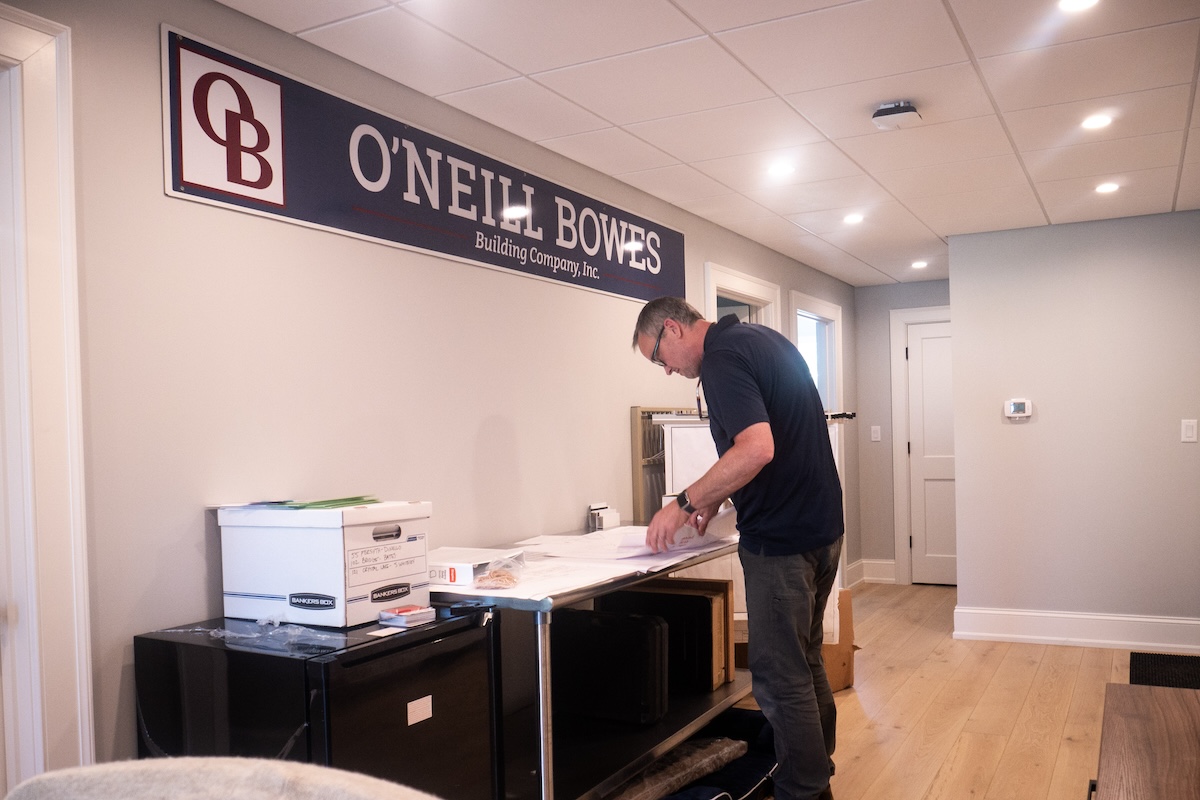
Alec Peters going through plans at the O'Neill Bowes office in Osterville, MA.

What OBB Does Differently, and What That Changes for the Superintendent

Many job sites have a version of the same problem: decisions that should have been made in preconstruction get deferred to the field, and the field pays for it in time, rework, and cost. A superintendent at that kind of company spends a meaningful part of the job managing improvisation that should not have been necessary.

At OBB, the preconstruction process is designed to resolve as much of that as possible before the crew arrives. Alec’s colleague Jim Stokes works through the build in BIM, modeling the structure in three dimensions and surfacing conflicts that flat drawings have a hard time catching. By the time Alec is on site, a significant portion of what would otherwise become field problems have already been identified and resolved back at the office months ago.

That does not mean the field is without its conflicts. It’s not. Materials behave differently than models, conditions change, and there’s always something that only becomes visible once construction is underway. But the nature of those problems is different: they’re the exceptions, not the baseline. Alec is solving genuinely novel issues rather than cleaning up decisions that were never made.

What that changes, practically, is where his attention goes. Less recovery, more quality. Less explaining why something is not right, more making sure everything is. For the client, the difference shows up in the finished house.

Experience Teaches You in a Way That Nothing Else Can

Experience is a knowledge that doesn’t come from plans or training or being instructed by someone who already has it. It will come, eventually, from being on enough job sites, over years and years; that’s when you start to see the shape of a problem before it has fully formed.

Alec has earned that. It shows up in small ways constantly: he can look at a set of kitchen plans and see that a refrigerator door is not going to open fully because of a return wall, or that two doors are going to collide in a way that will not be obvious until both are hung. He catches these things at the planning stage, before they become field problems, because he has seen enough finished versions of that mistake to recognize the early version on paper.

It shows up in how he reads subcontractors, too. The most instructive example is simple: a carpenter who installs stair railings before the nosings are in place, confident he has done it enough times to make it work, has not accounted for the fact that every job is different, that the baluster spacing will throw his reveals once the nosings go in. Alec watches for patterns: the experienced-enough hand who has stopped asking whether the sequence is right for this particular job, the sequence is the sequence and the results don’t lie.

What experience actually teaches you is that the process is a valuable product. Get the order wrong and the work suffers, no matter how skilled the hands doing it.

What Drives Him

Alec has lived and worked within sight of the water since he left NC State in his 20s. Nantucket first, then the Cape. The one brief detour, a year in Wellesley during the 2008 economic downturn, only confirmed what he already suspected: he is not built to be landlocked. He came back to the coast and, fortunately, has not had to seriously consider leaving since.

What keeps him here is not complicated: it is the work itself, and the specific satisfaction of watching something come together the right way. Not just finished, but finished well. The trim sitting the way it should, the details landing the way they were drawn, the client walking through a house that exceeded even their own expectations (possible yet!).

After more than two decades in the trades, that feeling has not gone stale. The only thing that he’s adjusted to is his ability to protect it by finding the best craftsmen, setting the standard early, and holding it through to the end. That is what he is still getting better at, and what he shows up for every day.

Team Strong

The work O'Neill Bowes Building does before a project breaks ground is only as good as the team carrying it into the field. The preconstruction process resolves problems early, the BIM modeling surfaces conflicts before they become costly, and the systems we have built are designed to protect the client's project from the kind of improvisation that erodes quality. Alec Peters is one of the big reasons that protection holds.

He is on site, managing the sequence, holding the standard, and making the informed decisions that keep a high-end custom build on the Cape moving the way it should. The plan stays the plan because someone who knows exactly what’s required is watching over it every day.

••••

Planning a project on Cape Cod?
Call Our Office Anytime to Discuss: 508-419-2622

Key Points

Who is Alec Peters and what does his role as Project Superintendent mean at O'Neill Bowes?

Alec Peters is the connective tissue between what O'Neill Bowes resolves in preconstruction and what gets built in the field. His role is not a job description so much as a felt presence on every active project he runs.

  • He manages three or four high-end custom home projects simultaneously, moving between sites, coordinating subcontractors, resolving field conditions, and keeping each job on schedule without pulling the principals in for every decision
  • The trust between Alec and the OBB ownership is built in, the product of more than two decades of high-end residential construction experience that does not require oversight to produce good outcomes
  • His role is the link between plan and product, ensuring that the precision of OBB's preconstruction process carries through to the finished house rather than eroding in the field
  • He documents every project comprehensively, photographing each stage and walking every house with a 360 camera before walls close in, so that questions arising months after construction are already answered
  • What makes him effective at the hardest parts of the job is the same instinct that made him patch a sheetrock wall in high school without being asked: he sees what needs doing and does it

What is Alec Peters's background and how did he come to high-end residential construction on Cape Cod?

Alec's path to OBB runs through Long Island, North Carolina, Nantucket, and more than a decade of Cape Cod construction at the highest levels of the residential market. It was not a straight line, but it was a consistent one.

  • He grew up on Long Island alongside a father who renovated and resold properties, demoing walls and banging nails before there was any plan to make it a career, building a hands-on instinct that has been useful ever since
  • At NC State he earned a degree in greenhouse production and construction management, developing a methodical, physical approach to work and a feel for sequencing and process that translated directly into construction
  • On Nantucket he came up under a demanding craftsman and ex-boatbuilder who ran a boutique high-end construction company, throwing Alec into complex work including framing a 15,000 to 20,000 square foot compound and building custom stair treads with a router, learning by doing with real consequences for getting it wrong
  • He spent years running trim crews for reputable Cape Cod builders, eventually founding Fenton Builders and growing it to more than twenty people working across some of the most significant residential projects on the peninsula
  • He joined O'Neill Bowes after winding down his own company, bringing the full depth of that formation into a role that puts it to use every day

What does running a high-end custom home project on Cape Cod actually require from a superintendent?

The job looks like logistics from the outside. What it actually requires goes considerably deeper than scheduling and site visits.

  • There is no normal day, only a running list that changes by the hour across multiple active projects, and the skill is knowing which item on that list needs immediate attention and which ones can wait
  • The role carries responsibility for the whole project in a very practical sense, knowing where the wires run behind the sheetrock, which subcontractors are reliable and which need close instruction, where the sequence can flex and where it absolutely cannot
  • Client-facing moments happen on site, not just in the office, from walking a punch list with homeowners who just returned to town to being the person who explains what is happening and why at every stage
  • The Cape Cod market demands a specific kind of attention that comes from years of working at this level in this place, where the expectations are high, the craftsmen worth trusting are finite, and the standard of finish has to hold all the way through
  • What separates a good superintendent from a great one is not the ability to manage the expected problems but the judgment to catch the unexpected ones before they become expensive

How does OBB's preconstruction process and BIM modeling change what Alec's job looks like in the field?

At many companies, the field is where deferred decisions land. At OBB, the design of the preconstruction process is specifically intended to prevent that, and the difference is something Alec experiences directly on every project.

  • Jim Stokes works through each build in BIM before construction begins, modeling the structure in three dimensions and surfacing conflicts that flat drawings would not catch, so that a significant portion of potential field problems are identified and resolved months before the crew arrives
  • The nature of the problems Alec encounters on site is fundamentally different as a result: they are the exceptions rather than the baseline, genuinely novel field conditions rather than the accumulated cost of decisions that were never made in preconstruction
  • That shift in the nature of the problems changes where his attention goes, less time on recovery and rework, more time on quality control and the kind of close execution that defines a finished house at this level
  • The field is still not frictionless, materials behave differently than models and conditions change, but the difference between solving a novel problem and cleaning up a preventable one is felt in the pace, the budget, and ultimately the finished product
  • For the client, the preconstruction investment shows up in the house, in the way the details land, the way the finish holds, and the absence of the compromises that accumulate when improvisation is the default mode

What does Alec Peters watch for on a job site that only experience teaches you to see?

Field judgment is a specific and learnable thing, but it is not taught. It develops across years on enough job sites that the shape of a problem becomes recognizable before it has fully formed.

  • He can read a set of kitchen plans and identify conflicts that will not be visible until construction is underway, a refrigerator door that will not open fully because of a return wall, two doors that will collide once both are hung, details that look fine on paper and cause expensive rework in the field
  • He watches for the sequence problem, the subcontractor who applies a practiced routine to a job that actually requires a different order of operations, catching that pattern before it produces work that has to be undone
  • The stair railing example is instructive: installing railings before nosings are in place may feel efficient to a carpenter who has done it many times, but baluster spacing will throw the reveals once the nosings go in, and every job is different enough that assuming otherwise is a mistake
  • What experience actually teaches is that the process is the product, get the order wrong and the work suffers regardless of how skilled the hands doing it, a principle Alec applies every day across every project he runs
  • He also watches for the craftsmen worth trusting, finding the subcontractors who show up prepared, know their sequence, and hold their own standard, and holding onto them once found, because that supply is not unlimited on the Cape

What keeps Alec Peters on Cape Cod and what does he still want to get better at?

After more than two decades building at the highest levels of residential construction, Alec is not coasting. What drives him is the same thing it has always been, and he is still actively working at it.
  • He has lived and worked within sight of the water since leaving NC State, first on Nantucket and then on Cape Cod, with one detour inland during the 2008 downturn that confirmed he is not built for landlocked
  • What keeps him here is the work itself, and the specific satisfaction of watching a project come together the right way, not just finished but finished well, the trim sitting as it should and the details landing as they were drawn
  • After more than two decades that feeling has not gone stale, which is its own kind of answer to the question of whether this is the right work for the right person
  • What he is still getting better at is protecting that outcome, finding the craftsmen worth finding, setting the standard early on every project, and holding it through to the final walkthrough
  • For OBB's clients, that ongoing investment in craft and standard is what they get when Alec Peters is running their project: someone who has not stopped caring about the outcome, and who has been building the judgment to protect it for more than twenty years

More Perspectives

A Lite Studio Production