Choosing the right materials for an outdoor kitchen on Cape Cod is one of the most consequential decisions a homeowner can make – and one that's easy to get wrong without the right guidance. Salt air, high humidity, intense UV exposure, and frequent coastal storms create conditions that standard materials simply aren't engineered to handle over time.
What appears to be a well-specified installation can quietly become a cycle of maintenance and eventual replacement. Homeowners discover that the same environment that makes Cape Cod exceptional also places demands on materials that inland settings never would.
This guide breaks down the real differences between marine-grade and standard outdoor kitchen materials – cabinetry, countertops, hardware, fasteners, and appliances – with a focus on what actually performs reliably on the Cape. Understanding these distinctions upfront supports informed, responsible choices that protect the investment and maximize long-term enjoyment.
The coastal environment is categorically different from inland locations – not just harsher in degree, but defined by specific, compounding conditions that expose the limitations of standard materials in predictable ways.
Salt-laden air breaks down painted and powder-coated surfaces, penetrating small imperfections and accelerating rust and finish failure from underneath. High humidity that cycles with seasonal temperature swings causes wood-composite and lower-grade cabinetry to expand, contract, and eventually warp. Intense UV exposure dulls and weakens surface finishes, particularly polished or uncoated materials. Freeze-thaw cycling in winter adds further stress to countertops, fasteners, and framing components not rated for coastal conditions.
The result is that standard materials often require attention within two to three seasons – earlier than most homeowners anticipate, and well before the installation has delivered its intended value. Understanding why this happens is the first step toward making choices that don't repeat the cycle.
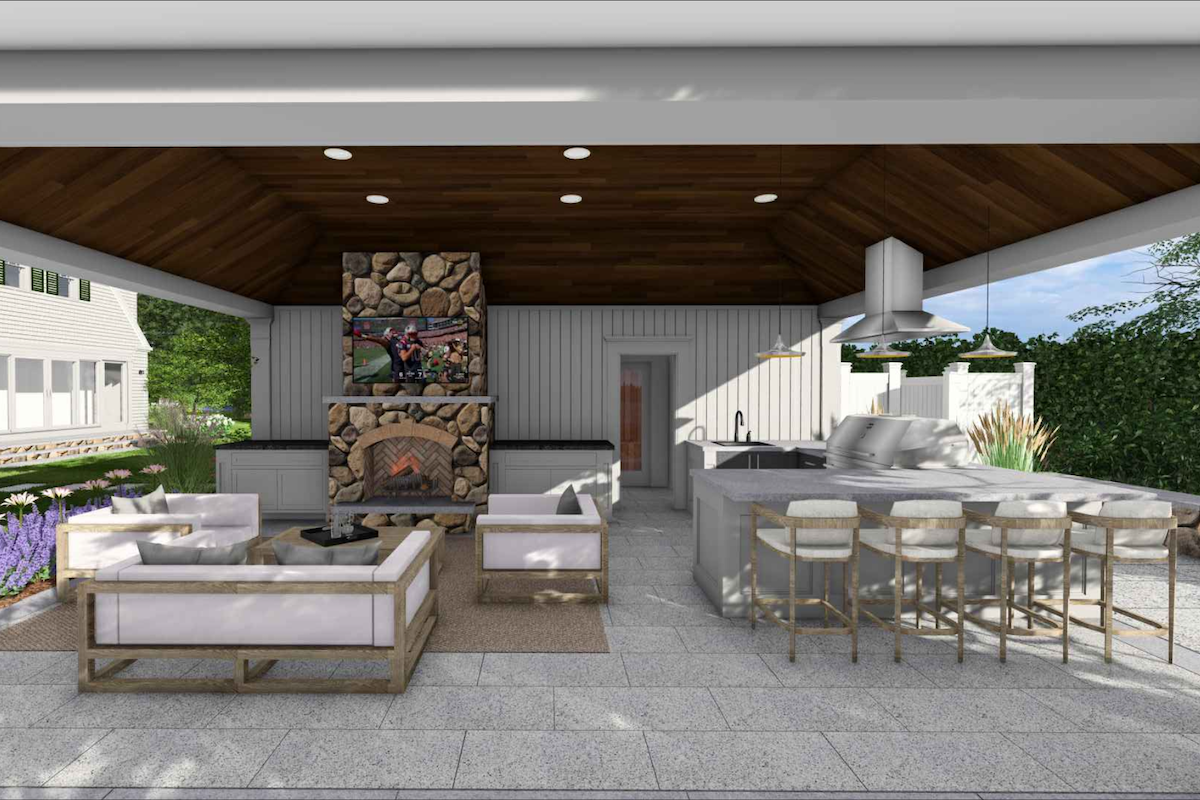
When selecting cabinetry for a Cape Cod outdoor kitchen, the choice between marine-grade powder-coated metal and standard options has the greatest single impact on long-term performance. The coastal environment places specific demands that ordinary materials are not designed to meet.
Marine-grade powder-coated stainless steel – such as those from coastal specialists like Danver – are engineered specifically for salt-air exposure. The powder-coating process creates a thick, uniform protective layer with excellent adhesion, resisting corrosion and chipping even after sustained exposure to salt spray and humidity cycling. These cabinets maintain structural integrity under temperature fluctuations and moisture, supporting a significantly longer service life.
Standard painted metal or lower-grade powder-coated alternatives show wear more quickly in the same conditions. Salt air penetrates surface imperfections, leading to rust and finish breakdown within a few seasons. Wood-framed composite cabinetry, while sometimes selected for its initial appearance, is particularly susceptible to expansion, contraction, and warping as humidity rises and falls along the Cape.
Marine-grade systems also offer a practical modular advantage: individual components – doors, drawers, panels – can typically be reconfigured or upgraded without replacing the entire setup, preserving the original investment as needs evolve.
Other strong exterior cabinet materials to keep in mind: Marine PVC and Marine painted woods or natural wood materials, like Cedar or Mahogany, and new composite materials such as Acre are few to be consider.
At O'Neill Bowes, the consistent recommendation is to prioritize longevity as well as aesthetics when it comes to cabinetry. The right material keeps the outdoor kitchen functional and attractive for many years, letting homeowners focus on enjoyment rather than upkeep.
Countertop selection is among the most visible decisions in an outdoor kitchen, and the difference between polished and weathered/honed granite is more consequential on Cape Cod than most clients initially expect.
Polished granite offers a reflective surface at installation, but salt air, UV exposure, and regular cleaning dull the finish over time and make every mark, water spot, and mineral deposit more apparent. The surface can also become slippery when wet – a practical concern in an outdoor setting subject to sea spray and rain.
Weathered or honed granite carries a softer, more matte finish that already reflects an aged, natural character. Minor wear and surface marks blend into the overall appearance rather than standing out against it. In the Cape environment, this finish ages more gracefully and requires less intervention to maintain its look over time.
One specific note to consider when choosing darker tones, like Absolute Black granite: without adequate overhead coverage – a cabana roof or pergola overhang – this dense stone absorbs significant heat from direct sun. On warm summer days it can become uncomfortable to touch and capable of damaging items left on the surface. Coverage requirements for this material should be confirmed before selection.
Tile and engineered stone alternatives are sometimes considered for cost or appearance reasons, but both tend to underperform in coastal conditions. Grout lines in tile trap moisture and salt; many engineered stones are more susceptible to UV fading and thermal expansion issues than natural granite.
Not all stainless steel is created equal - and on Cape Cod, that distinction matters more than most homeowners expect. Hardware, fasteners, and appliances are the working components of the kitchen, and on Cape Cod they face continuous exposure to salt air and moisture. The right specifications here determine whether the installation performs reliably season after season or begins requiring intervention within a few years.
Stainless steel is the standard material, but grade matters significantly. 316 stainless - marine-grade - contains higher levels of molybdenum, giving it measurably better resistance to salt spray corrosion compared with the more commonly specified 304 grade. This difference becomes visible over time in coastal conditions. Rust-proof fasteners and powder-coated framing protect structural integrity and appearance at the connections and framing points that are easiest to overlook during specification.
Appliances require equally careful selection. Outdoor-specific grills, hoods, ice makers, and refrigerators are built with sealed components, corrosion-resistant materials, properly integrated pump systems, and weatherproofing designed for year-round exposure. Residential-grade appliances even those labeled stainless are intended for protected indoor environments and will corrode or underperform more quickly when installed in a coastal outdoor kitchen.
Local code requirements add a layer worth addressing early. Many Cape Cod municipalities have specific rules governing grill and hood installations – clearance distances from structures, venting requirements, and power ratings. These vary by town and are best confirmed during preconstruction planning to avoid permitting delays or modifications after installation.
Selecting standard materials for a Cape Cod outdoor kitchen can appear cost-effective at the outset. Over time, however, what appears cost-effective at the outset can lead to a recurring cycle of maintenance of maintenance and replacement that most homeowners don't anticipate when the kitchen is new.
Standard cabinetry, hardware, and finishes often show meaningful wear within two to three seasons due to the combined effects of salt air, humidity, and temperature cycling. Minor wear - surface rust, peeling finish, warping cabinet doors - progresses to the point where components need replacement to keep the kitchen functional and presentable. Across a decade, the total investment over time, including reactive repairs and replacements, often exceeds the cost of specifying marine-grade materials from the start.
Marine-grade options represent a different approach: a single, responsible investment in materials engineered for the coastal environment. Powder-coated metal cabinetry, weathered granite, 316 stainless hardware, and outdoor-rated appliances are chosen precisely because they are built to withstand conditions that accelerate the deterioration of standard alternatives.
The most useful frame for evaluating materials is long-term value and enjoyment. A well-specified outdoor kitchen becomes a space the family uses and appreciates across many seasons - not a recurring maintenance project that competes for attention and budget.
Once you're looking at a quote there are a few questions that can quickly reveal how seriously a proposal addresses the coastal environment.
Ask specifically whether cabinetry is marine-grade powder-coated metal and which manufacturer is specified. Ask whether countertops are weathered or honed granite and whether any polished stone selections include a coverage plan. Ask whether hardware is 316 stainless and whether appliances carry outdoor-specific ratings for coastal conditions.
Watch for vague descriptions: "stainless steel" without a grade designation, "powder-coated" without marine-grade specification, or "granite" without finish detail. These are indicators that standard materials may be dressed up with general coastal language rather than engineered for Cape Cod conditions. Brands that specialize in coastal outdoor environments – Danver for cabinetry being the clearest example – are worth noting as positive signals.
At O'Neill Bowes, reviewing proposals and explaining what the specifications actually mean for long-term performance is part of how we approach preconstruction conversations. The goal is always to help clients make confident, informed choices aligned with their vision and the realities of the Cape.
The decision framework for outdoor kitchen materials on Cape Cod is straightforward: longevity over initial aesthetics. Marine-grade cabinetry, weathered granite, 316 stainless hardware, and outdoor-specific appliances are investments that keep the space functional and attractive through many seasons of salt air, humidity, and coastal weather.
When performance and durability are prioritized from the start, the kitchen becomes a genuine extension of the home – a place for reliable enjoyment rather than recurring attention.
•••••
Planning a project?
Call Nick anytime to discuss: 774.487.0475